.png)

There Is No Single Perfect Portion
Catering quantities change depending on whether food is a light snack, a full lunch or part of a longer event. Guest age, event length, time of day and the number of menu choices can all affect how much people eat.
A Practical Starting Guide Per Person
Sandwiches for a Full Lunch
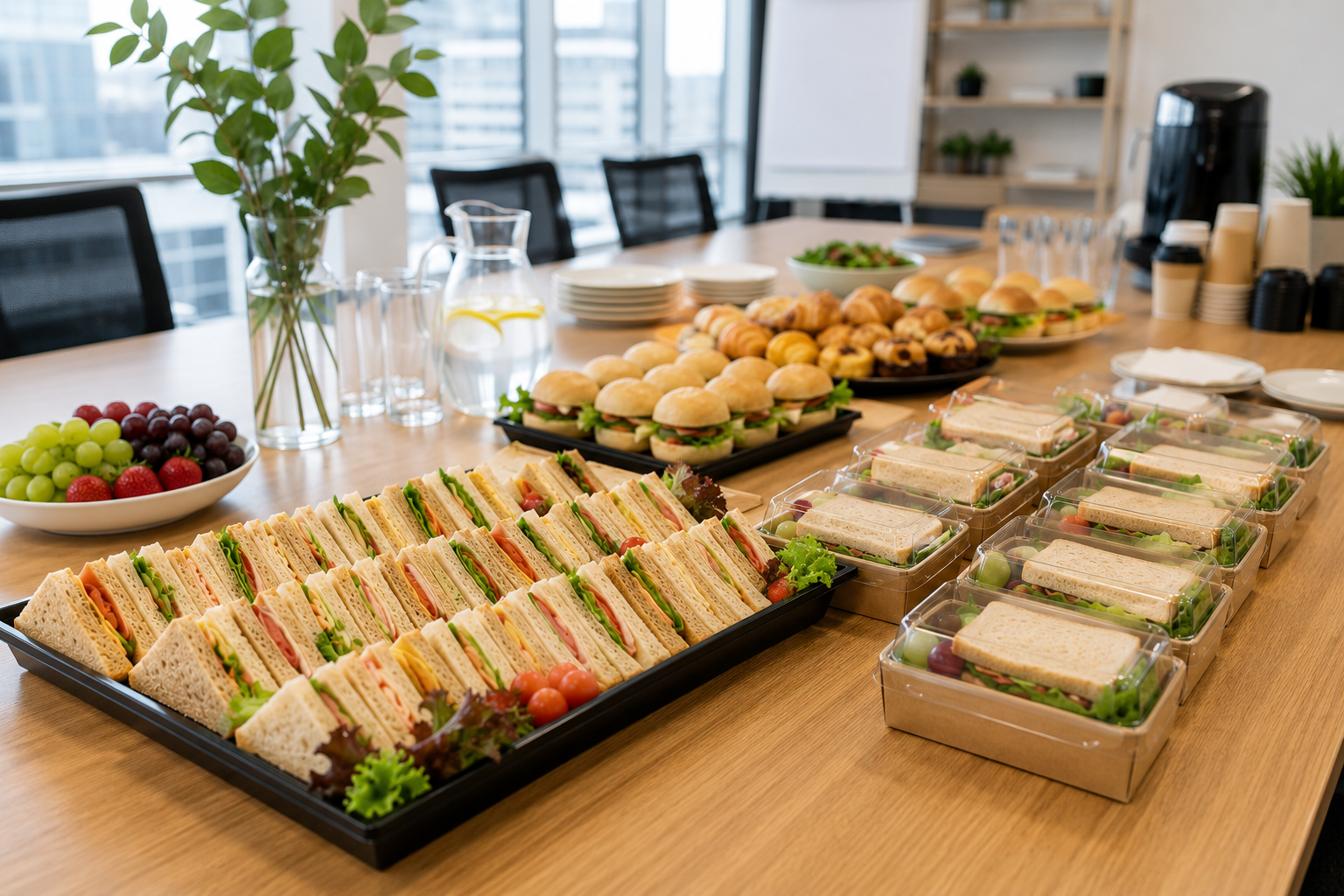
For a lunch where sandwiches are the main meal, a useful starting point is around one substantial sandwich per person, or an equivalent amount cut into smaller platter portions. Add a modest buffer if the group has larger appetites or the meeting runs for several hours.
Finger Food
For a short snack break, around 3 to 5 small pieces per person may be enough. When finger food replaces a meal, organisers often need closer to 6 to 10 pieces per person, depending on item size and how filling the selection is.
Sliders and Small Rolls
Two small sliders per person can be a reasonable starting point for a light lunch when sides are included. Larger appetites or longer events may need more.
Fruit and Sides
Fruit, salads, chips and other sides should support the main meal rather than replace it. Small portions are usually enough when several other foods are available.
Adjust the Order for the Type of Event
Morning meetings generally need less food than a full midday lunch. Training days may need a main lunch plus a lighter morning or afternoon break. Networking events often need more small pieces because guests eat gradually while moving around.
More Variety Can Change How Much You Need
When there are many options, people often try several items. A smaller number of well chosen dishes can make quantities easier to manage. Our platters vs lunch boxes guide can help decide the serving format.
Always Confirm Dietary Requirements
Do not count special dietary meals as part of a general platter unless they are genuinely suitable for those guests. Separate vegetarian, vegan, halal or allergy related meals where needed so nobody is left without an appropriate option.
How Much Extra Food Should You Order?
A small buffer can be sensible, particularly when attendance may change. Around 5 to 10 percent extra is often more practical than ordering a large surplus. For a confirmed small meeting, the buffer may be smaller.
Simple Ways to Reduce Catering Waste
- Confirm numbers as close to the event as practical.
- Ask for dietary needs early.
- Match portions to the time of day.
- Avoid too many overlapping menu items.
- Use individual boxes when exact portions matter.
- Use shared platters when guests need more flexibility.
Planning Melbourne Office Catering
For help choosing quantities, our office catering services in Melbourne cover fresh sandwiches, sliders, platters and drinks. You can also read our team meeting catering guide for more planning ideas.
Conclusion
The right catering quantity is based on the event, not just the headcount. Start with the meal type, consider how long guests will be there, allow for dietary requirements and add only a sensible buffer. Careful planning keeps guests satisfied while reducing unnecessary waste.